
-
What is the Datacenter Academy
The Datacenter Academy is a community skilling program that collaborates with local education partners to create pathways into the datacenter industry. By building strong partnerships with local vocational schools and community colleges, DCA helps expand access to technical education and career development in the communities where Microsoft datacenters are located. The program supports local institutions through five core pillars: curriculum alignment, scholarships and financial aid, mentorship, simulation labs, and work experience. DCA’s goal is to empower communities with the tools, guidance, and opportunities to pursue sustainable careers in digital infrastructure.
-
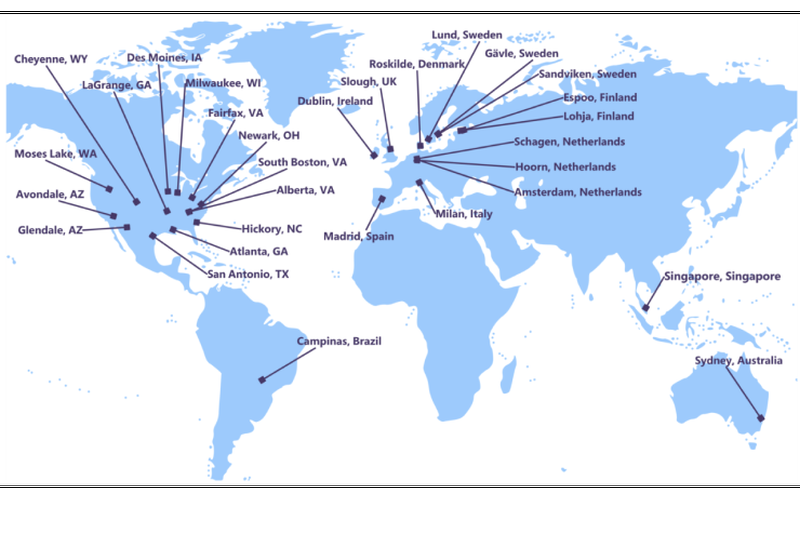
Datacenter Academy locations
Explore the global network of Datacenter Academies with ongoing initiatives to expand this network in the near future.

The five core pillars
-
Curriculum
Work with local education partners to ensure high quality industry recognised curriculum.
-
Datacenter Lab
Datacenter equipment for hands-on digital skills training and education.
-
Mentorship & Support
Connecting with others and learning from current employees. Our local datacenter teams mentor and support students in their education development.
-
Work Experience
Opportunity to gain valuable work experience at a Microsoft Datacenter.
-
Scholarships & Financial Grants
Provide financial support for diverse students.
Curriculum
The Curriculum Alignment pillar of the Datacenter Academy Program focuses on building strong partnerships with local educators in Microsoft datacenter communities. Together, we work to align existing IT and technical curricula with the knowledge and skills needed for careers in datacenter operations and digital infrastructure, coupled with the relevant industry-recognized qualifications.
To support this, DCA offers partner institutions access to a vendor-agnostic, six-module course — “Introduction to Datacenters” — which provides foundational knowledge on datacenter design, operations, sustainability, and community impact. The course is designed to inspire learners and enrich classroom instruction by introducing real-world examples and career pathways in the datacenter industry.
Through this pillar, the Datacenter Academy Program helps strengthen local education ecosystems by contributing to curriculum planning and supporting hands-on learning experiences that reflect real-world datacenter environments.
Datacenter lab
-
About -
How it works -
Datacenter lab
-
As part of our commitment to community partnerships, Microsoft actively supports our education partners in supplementing classroom instruction by providing resources to build datacenter labs. Through donations of datacenter equipment, we enable these partners to establish on-site labs, offering students valuable hands-on experience with cloud storage tools and equipment. By fostering familiarity with this equipment, students are better prepared for successful careers in IT.
-
The typical lab contains at least three (3) rack cabinets with a mix of servers, storage devices and networking equipment. If the learning institution has more space, a bigger lab deployment is possible. Microsoft’s Workforce Development team partners with local construction companies to outfit the new lab with the necessary cooling, ventilation, and wiring to support lab operations. Typically, datacenter labs are deployed in a classroom nearest the school’s computer science or IT programs.
-
As part of our commitment to community partnerships, the Datacenter Academy program helps local schools and colleges bring datacenter learning to life through hands-on lab environments. Through donations of datacenter equipment, we support our education partners in creating on-campus simulation labs that mirror real-world IT environments.
These labs give students the opportunity to explore, configure, and troubleshoot enterprise - grade infrastructure, building confidence and practical skills that prepare them for careers in digital infrastructure. Each lab is tailored to the physical space and needs of the institution, with support from local contractors and Microsoft’s sustainability-focused Circular Centers.
These spaces help learners connect theory to practice—and bring the datacenter industry closer to the communities where we operate.


-

As part of our commitment to community partnerships, Microsoft actively supports our education partners in supplementing classroom instruction by providing resources to build datacenter labs. Through donations of datacenter equipment, we enable these partners to establish on-site labs, offering students valuable hands-on experience with cloud storage tools and equipment. By fostering familiarity with this equipment, students are better prepared for successful careers in IT.
-

The typical lab contains at least three (3) rack cabinets with a mix of servers, storage devices and networking equipment. If the learning institution has more space, a bigger lab deployment is possible. Microsoft’s Workforce Development team partners with local construction companies to outfit the new lab with the necessary cooling, ventilation, and wiring to support lab operations. Typically, datacenter labs are deployed in a classroom nearest the school’s computer science or IT programs.
-

As part of our commitment to community partnerships, the Datacenter Academy program helps local schools and colleges bring datacenter learning to life through hands-on lab environments. Through donations of datacenter equipment, we support our education partners in creating on-campus simulation labs that mirror real-world IT environments.
These labs give students the opportunity to explore, configure, and troubleshoot enterprise - grade infrastructure, building confidence and practical skills that prepare them for careers in digital infrastructure. Each lab is tailored to the physical space and needs of the institution, with support from local contractors and Microsoft’s sustainability-focused Circular Centers.
These spaces help learners connect theory to practice—and bring the datacenter industry closer to the communities where we operate.


Mentorship and Guidance
-
Mentorship Program -
Datacenter Q&A Sessions -
Instructor Training -
Employee-Led Classrooms: -
Mock Interviews -
Advisory
-
At the heart of the Datacenter Academy experience is the opportunity for students to connect with professionals working in Microsoft’s datacenters. Through a range of engagement activities—delivered where local capacity allows—students gain valuable exposure to real-world IT environments and career pathways.
Students may be matched with Microsoft Datacenter Operations employees who provide guidance on career development, soft skills, and navigating the tech industry. These relationships help students build confidence, expand their networks, and prepare for future roles.
-
Team members may host interactive sessions to share insights into daily operations, roles, and technologies used in hyperscale datacenters
-
Where feasible, Microsoft technicians offer training to educators on topics such as cabling, hardware installation, and safety protocols—bringing industry best practices into the classroom.
-
In some locations, Microsoft staff may deliver guest instruction on topics like cable management, fiber troubleshooting, and career readiness (e.g., LinkedIn profiles, Microsoft Careers navigation).
-
In collaboration with partner schools, Microsoft employees may conduct mock interviews to help students gain confidence and experience with real-world hiring processes.
These activities vary by location and are dependent on the availability of local Microsoft staff. Wherever possible, we aim to create meaningful connections between students and professionals to support learning, growth, and long-term success.
-
Students enrolled in a DCA Aligned course will be kept informed of the availability of these opportunities via school communications.


-

At the heart of the Datacenter Academy experience is the opportunity for students to connect with professionals working in Microsoft’s datacenters. Through a range of engagement activities—delivered where local capacity allows—students gain valuable exposure to real-world IT environments and career pathways.
Students may be matched with Microsoft Datacenter Operations employees who provide guidance on career development, soft skills, and navigating the tech industry. These relationships help students build confidence, expand their networks, and prepare for future roles.
-

Team members may host interactive sessions to share insights into daily operations, roles, and technologies used in hyperscale datacenters
-

Where feasible, Microsoft technicians offer training to educators on topics such as cabling, hardware installation, and safety protocols—bringing industry best practices into the classroom.
-

In some locations, Microsoft staff may deliver guest instruction on topics like cable management, fiber troubleshooting, and career readiness (e.g., LinkedIn profiles, Microsoft Careers navigation).
-

In collaboration with partner schools, Microsoft employees may conduct mock interviews to help students gain confidence and experience with real-world hiring processes.
These activities vary by location and are dependent on the availability of local Microsoft staff. Wherever possible, we aim to create meaningful connections between students and professionals to support learning, growth, and long-term success.
-

Students enrolled in a DCA Aligned course will be kept informed of the availability of these opportunities via school communications.


-
Work experience
The Work Experience pillar of the Datacenter Academy Program provides eligible students from partner schools with the opportunity to apply for structured, hands-on internships or apprenticeships at Microsoft datacenters. These experiences are designed to complement classroom learning and help students explore real-world roles in digital infrastructure—such as Datacenter Technician (DCT), Datacenter Inventory and Asset Technician (DIAT), or Critical Environment Technician (CET).
Internships typically last 16 weeks in regions like the Americas, with a wider variety of durations possible in EMEA and APAC. During this time, students taking part in Datacenter Technician or Datacenter Inventory and Asset Technician internships rotate through various functions—such as deployment, inventory, and break/fix—gaining exposure to the tools, processes, and teamwork that power Microsoft’s global cloud operations.
Participation in the program depends on the readiness of the datacenter site and the availability of local staff to host and mentor interns. Where capacity allows, Microsoft works closely with education partners to forecast intern placements and ensure a meaningful, well-supported experience.
While work experience does not guarantee a full-time role, students who complete the program are encouraged to apply for open positions and continue their journey in the datacenter industry. Students enrolled in a DCA Aligned course will be kept informed of the availability of this opportunity via school communications.
Scholarships & Financial Grants
The Datacenter Academy provides financial support to help remove barriers to education for students pursuing careers in IT and digital infrastructure. In partnership with local educational institutions, Microsoft offers scholarships and funding support that may cover tuition, fees, certification costs, or essential learning resources—depending on the needs of each community.
These scholarships are designed to promote access to technical education in the communities where Microsoft datacenters operate. By working directly with partner schools, we ensure that funding is distributed effectively and reaches the learners who need it most.
To explore Datacenter Academy opportunities in your area, please contact your local participating college or training provider.
How to enroll
-
Asia
-
Europe
-
North America
-
South America
Testimonials








Empowering the planet
-
What is the cloud and why is it important.
We are in the midst of the “fourth industrial revolution,” as organizations and individuals around the world use cloud computing to get the latest and greatest technology, power their businesses and daily lives, and accomplish things never thought possible. The cloud enables many of the activities we use on a daily basis: communication, banking, gaming, entertainment, business applications, artificial intelligence, and many more. The cloud enables organizations to deploy applications anywhere on the globe without constraints. The cloud hosts massive amounts of data that feed these applications and provide information to people and businesses around the world.
-
What is the Microsoft Datacenter Pledge?
Datacenters are at the heart of our daily life—hospitals, schools, businesses, and government all depend on the computing that happens in local datacenters. Datacenter buildings house thousands of computer servers and data storage devices connected to the internet.
At Microsoft, we are committed to building and operating datacenters responsibly, for the good of the community. This is our datacenter community pledge. We will contribute to a sustainable future, advance community prosperity and well-being and operate responsibly as a good neighbor.
More about working at Microsoft Datacenters
-

Datacenter jobs at a glance
What you do, what datacenters are, what it’s like, key skills and qualifications
-

Datacenter employee spotlight
Discover what inspired some of our people to pursue a career in the tech industry
-

Critical to modern society
Learn about the vital role datacenters—and the people who work there—play in powering everyday necessities.
-

What is the cloud?
Microsoft virtual datacenter grounds ‘the cloud’ in reality
-

We live in the cloud
Take a virtual tour of a Microsoft datacenter
-

Full tour of a Microsoft Datacenter
Vice Chair and President, Brad Smith gives a tour of Microsoft’s Quincy, Washington datacenter


